The ROG revolution
This guide provides a comprehensive analysis of the Red, Orange, and Green (ROG) system, which has revolutionized tennis development over the last two decades. From its humble origins in European laboratories to its current status as the global mandate for junior competition, this document outlines the history, mechanics, results, and future of the ROG pathway.
The ROG Revolution in Global Tennis Development
1. Introduction: What is ROG?
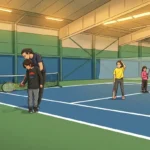
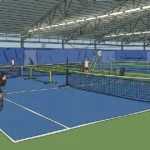
The ROG system (Red, Orange, Green) is a graduated development pathway that uses modified equipment—specifically lower-compression balls, smaller courts, and shorter racquets—to scale the game of tennis to a child’s physical and cognitive size.
- Red Stage: 75% slower than a standard ball; played on a 36-foot court.
- Orange Stage: 50% slower; played on a 60-foot court.
- Green Stage: 25% slower; played on a full 78-foot court.
2. History and Origins: Where It Started
The system did not appear overnight. It was born out of a realization in the late 1990s and early 2000s that tennis was losing participation because it was “too hard to learn.”
- The Early Pioneers: Small-scale modified ball systems existed in countries like Belgium, France, and Sweden in the 1990s. Belgian coaches, in particular, were early adopters, using foam and felt balls to develop future stars like Justine Henin and Kim Clijsters.
- The Architect: Derek Price, director of Price of Bath, is credited with developing the specific technical specs for the “Mini Red 75” ball that became the industry standard.
- The Global Mandate: In 2007, the International Tennis Federation (ITF) launched the “Play and Stay” campaign. By 2012, the ITF took the historic step of changing the Rules of Tennis to mandate that all sanctioned 10-and-under competitions must be played with ROG balls.+1
3. The “Why”: The Biomechanical Reason
Before ROG, a 7-year-old on a full court faced a yellow ball that bounced over their head. This forced children to:
- Use extreme “Western” grips just to hit a ball at shoulder height.
- Shorten their swings, preventing the development of full, fluid strokes.
- Stay stuck at the baseline, as they couldn’t physically cover the net on a full court.
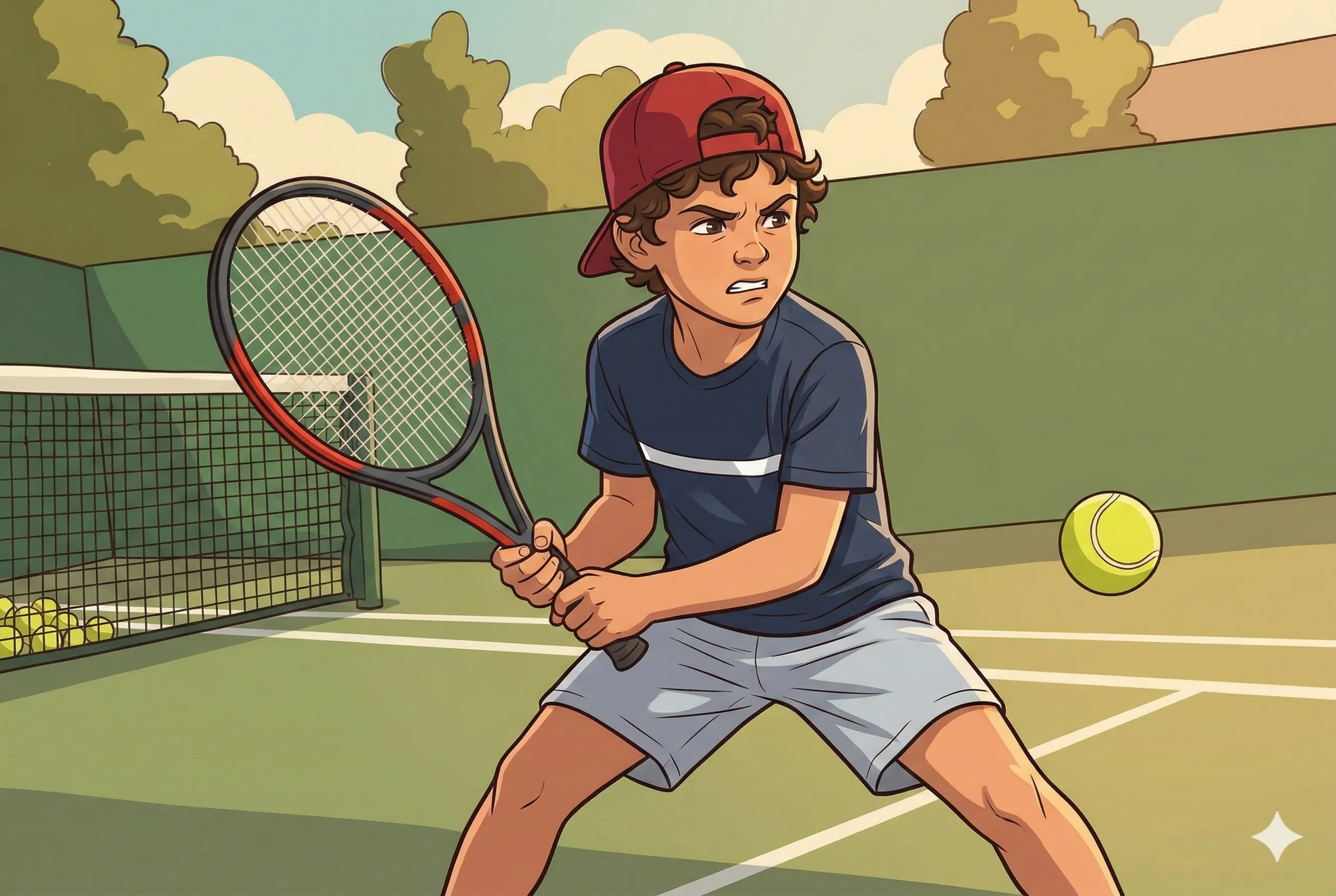
The ROG Result: By shrinking the court and slowing the ball, children can play “real” tennis—hitting at waist height, using proper grips, and employing tactics like coming to the net—from age five.
4. Famous Alumni: Stars Who Used ROG
While the oldest players (Federer, Nadal) grew up just before the global mandate, the “ROG Generation” is now dominating the ATP and WTA tours.
- Emma Raducanu: The 2021 US Open Champion is the “poster child” for the LTA’s ROGY (Red, Orange, Green, Yellow) pathway. She competed in sanctioned Orange and Green ball tournaments throughout her childhood in the UK.
- Carlos Alcaraz & Jannik Sinner: Both players grew up in systems (Spain and Italy) that integrated “Stage 1” (Green) balls heavily into their 10-and-under training to refine their timing and transition to the full court.
- Iga Świątek: The Polish development system utilizes the ITF Play and Stay model, ensuring her early technical foundation was built on scaled equipment.
5. The Future of ROG:
The system is evolving from a “teaching tool” to a “data tool.”
- ROG-Touren (The ROG Tour): Nations like Sweden have recently launched “ROG Tours” which move away from traditional rankings. They focus on “Match Schools” where kids get 4-6 hours of play in a single day, prioritizing volume over winning.
- Smart Equipment: We are seeing the introduction of “Smart ROG” balls with embedded sensors to track spin and speed, allowing coaches to see if a child is actually generating professional-style “heavy” balls at the Orange stage.
- Adult ROG: The “Tennis Xpress” movement is using Green and Orange balls to teach adults, proving that the system isn’t just for kids—it’s for anyone who wants to learn the game in weeks rather than years.
6. The Professional ROG Training Program
Based on recommendations from the ITF, USTA, and elite academies, here is the “Gold Standard” schedule for a future professional.
Stage 1: RED (Ages 5–8)
- Focus: Coordination, “Send and Receive” skills, and fun.
- Hours: 2–4 hours per week (Group).
- Ball: Red Felt/Foam.
- Court: 36′ x 18′.
- Goal: 20-ball rallies and ability to serve over the net.
Stage 2: ORANGE (Ages 8–10)
- Focus: Tactical awareness (Opening the court), spin development.
- Hours: 4–6 hours per week (Group + 1 Private).
- Ball: Orange (50% compression).
- Court: 60′ x 21′.
- Goal: Using “Approaches” and “Volleys” naturally in points.
Stage 3: GREEN (Ages 9–12)
- Focus: Transition to full-court movement and high-speed timing.
- Hours: 8hours per week (Tournament prep).
- Ball: Green (75% compression).
- Court: 78′ x 27′ (Full court).
- Goal: Consistency on the full court without losing “attacking” intent.
| Year | Ball | Weekly Hours | Ratio (Drill vs. Play) |
| Year 1-2 | Red | 2 hrs | 80% Play / 20% Drill |
| Year 3-4 | Orange | 4-6 hrs | 60% Play / 40% Drill |
| Year 5 | Green | 6-8 hrs | 50% Play / 50% Drill |
| Year 6+ | Yellow | 8 hrs | High Performance Mode |