Roland Garros: The Forge of Champions
From the Red Dust of Junior Academies to Grand Slam Immortality
Roland Garros is far more than just a tennis tournament; it is a cultural institution and the ultimate test of physical and mental endurance. Held annually at the Stade Roland Garros in Paris, it stands as the premier clay-court championship in the world. Unlike the hard courts of Melbourne or the manicured lawns of Wimbledon, Roland Garros is defined by an elemental battle against the terre battue—the red clay that demands patience, artistry, and an iron will.
But before a player ever slides across the Philippe-Chatrier court in a final, they have spent a lifetime in the “forge,” developing the specific DNA required to survive the dirt.
I. The Junior Blueprint: Building a Clay-Court Engine
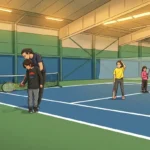
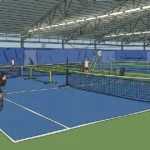
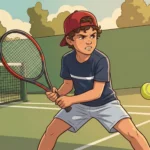
For a junior, Roland Garros isn’t just a destination; it’s a style of play that must be hard-wired into the nervous system. Training for clay is a fundamental departure from any other surface.
- The Art of the Slide: While hard-court players utilize explosive “stop-and-go” movement, clay-court juniors master the “slide-and-hit.” Modern stars like Carlos Alcaraz utilized slide boards and lateral agility drills as young teenagers to ensure their center of gravity remained perfectly balanced while skidding into a forehand.
- Tactical Patience: On slow red clay, winners are rare and unforced errors are lethal. Academies in Spain and South America focus on “Heavy Topspin”—aiming high over the net to push opponents back. Players like Novak Djokovic and Iga Świątek learned early that a point isn’t won in two shots, but often in twelve, requiring a chess-like ability to manipulate an opponent’s court position.
- Power Endurance: Because rallies last 30% longer on clay, junior training involves brutal High-Intensity Interval Training (HIIT). These drills mimic the 10-second bursts of a clay-court point, followed by 20 seconds of recovery, repeated for hours until the player’s “red-line” is pushed further than their rivals’.
II. The Developmental Timeline: Ages 6 to 16
To understand how a champion is “born,” we must look at the Golden Age of motor learning where biomechanics are hard-wired.
1. The Formative Years (Ages 6–12)
At this stage, the goal is proprioception (body awareness) and rhythm.
- The “Heavy Ball” Drill: In French academies, juniors often practice with “dead” balls on wet, heavy clay. This forces a 10-year-old to use their entire lower body and core to generate pace, rather than just their arms—foundational for the massive rotation seen in Rafael Nadal’s game.
- The Three-Meter Rule: Juniors are taught to aim at least three meters above the net. This creates a high-looping trajectory that “kicks” up above an opponent’s shoulder upon impact, a nightmare to return on a hot Parisian afternoon.
2. The Tactical Forge (Ages 13–16)
Once the technique is set, training shifts to “tactical suffering.”
- “El Carro” (The Basket): Made famous by Spanish coaches, this involves a coach feeding 100 balls at a rapid pace. By hitting at maximum intensity while exhausted, a young player learns to maintain technical precision when the lungs are burning—essential for a 5-set match.
- The Vertical Game (Drop-Shot-Lob): Because clay-court players sit so far behind the baseline, juniors spend hours on the “Y-axis.” A heavy topspin ball pushes the opponent back, followed immediately by a disguised drop shot. This is the hallmark of modern stars like Ons Jabeur.
III. From Prodigy to Parisian Legend
The stars we see today are the products of specific environments designed to conquer Roland Garros.
| Player | Age Started | Key Early Influence | Training Philosophy |
| Rafael Nadal | 3 | Toni Nadal | Practiced on poor courts with old balls to build “tolerance for suffering.” |
| Iga Świątek | 5 | Tomasz Wiktorowski | “Multi-Sport Athletics” (swimming/sprints) for unmatched lateral speed. |
| Novak Djokovic | 4 | Jelena Genčić | Combined “mental visualization” with grueling Balkan “grinding” drills. |
| Justine Henin | 5 | Carlos Rodriguez | Focused on a one-handed backhand that used the entire body’s kinetic chain. |
The Mental Forge: “The 5-Minute Game” In elite academies like Mouratoglou, coaches implement the “No-Winner Rule.” A point only counts if it is won by an error or after a 10-ball rally. This removes the ego of the “quick ace” and forces a 15-year-old to embrace the grind, teaching them that the winner in Paris is usually the one willing to stay on court one minute longer.
IV. The Arenas: Cathedrals of Sport
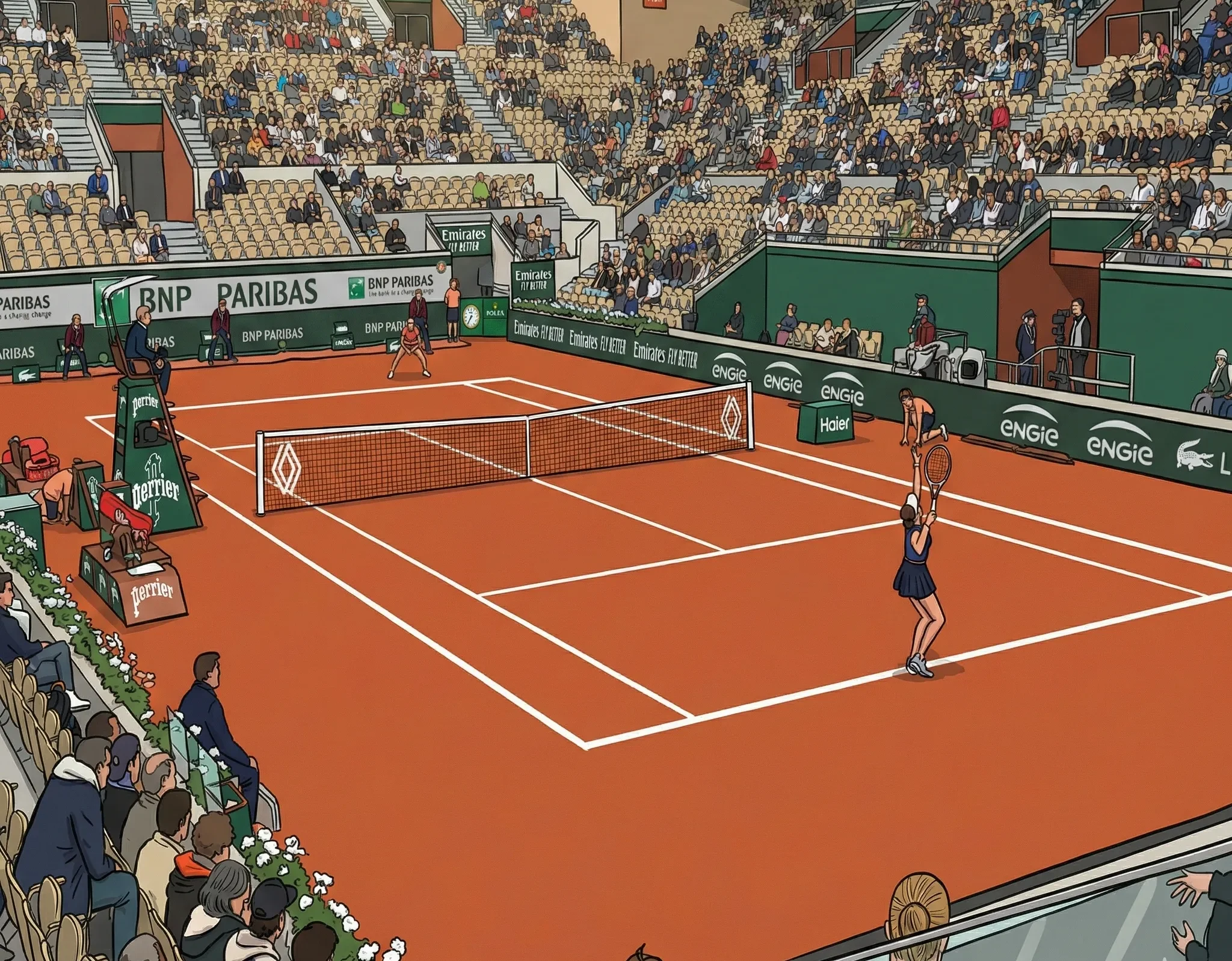
The Stade Roland Garros has evolved into a modern masterpiece, featuring three iconic “Cathedrals”:
- Court Philippe-Chatrier: The gladiatorial pit seating 15,000, now featuring a retractable roof to ensure the battle continues rain or shine.
- Court Suzanne-Lenglen: Named after the “Divine One,” its 2024 roof design is inspired by the pleats of her iconic 1920s tennis skirts.
- Court Simonne-Mathieu: Sunken into the Jardin des Serres d’Auteuil, it is surrounded by greenhouses, blending the heat of competition with botanical tranquility.
V. Conclusion: The 100,000-Slide Journey
Roland Garros remains the ultimate truth-teller. The red clay strips away luck, leaving only skill, stamina, and heart. By the time a player reaches the qualifying rounds, they have likely slid over 100,000 times in practice and hit millions of balls with the sole intent of clearing the net by a wide margin.
This isn’t just talent; it is a meticulously engineered physiological adaptation. From the grueling sessions in Mallorca to the sun-drenched afternoons in Paris, the journey to the Coupe des Mousquetaires is the test of a lifetime. As the red dust continues to rise, it waits for the next junior who has spent enough years in the forge to finally leave their mark on history.